





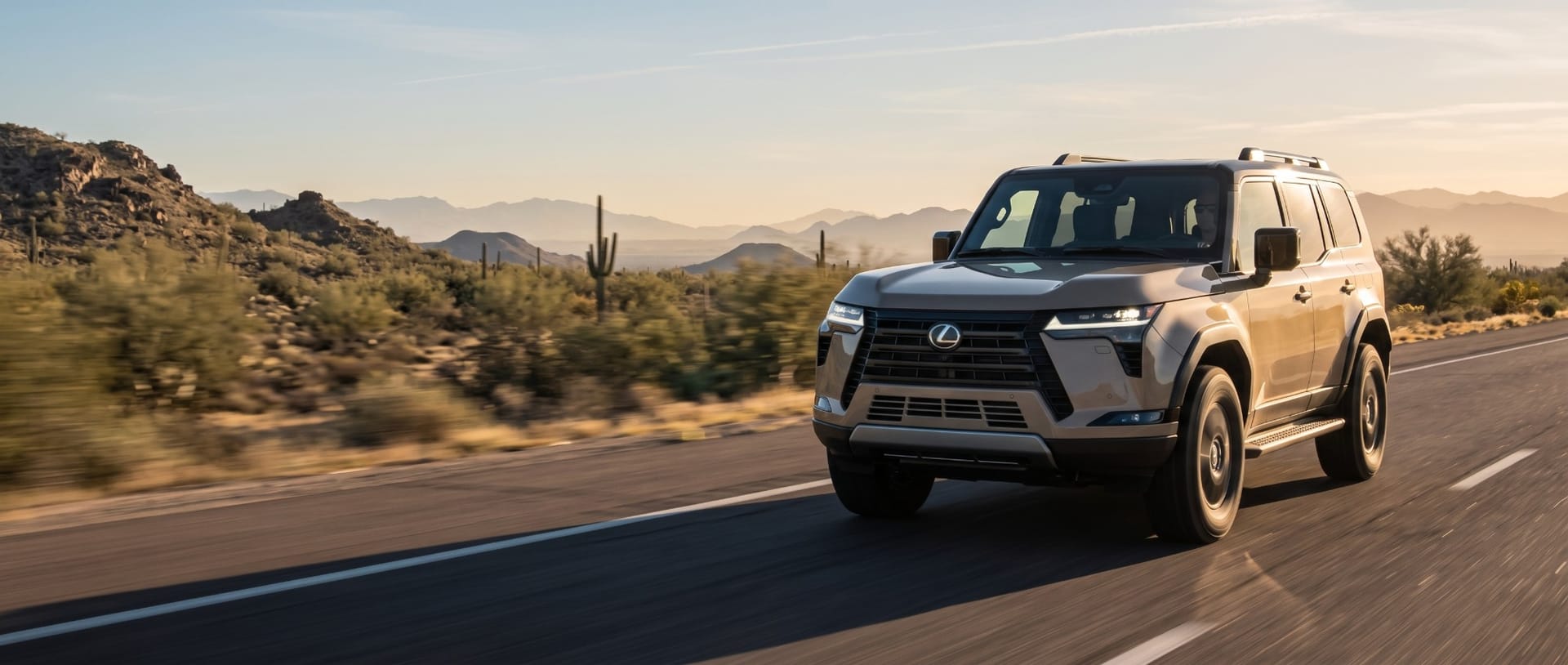
Chiptuning Lexus LS
Up to 12% more power for your Lexus LS
Our catalogue lists 4 generations and 11 engines for the Lexus LS. For 11 naturally aspirated engines, the options are the GAN GA and GAN GA+: the GAN GA+ adds +21 to +39 hp (GAN GA+ from 199 EUR).
Which Lexus LS do you have?
Start with the model year and chassis code. Then pick your engine by the power output shown in your vehicle documents.
Lexus LS remap: what the GAN box does and doesn’t do
More power and torque without rewriting the ECU or replacing any parts. Your manufacturer’s warranty is preserved: the ECU software is never changed, and the box can be removed at any time.
- Bluetoothchange modes from your phone
- 18 mapsfine-tuning for your engine
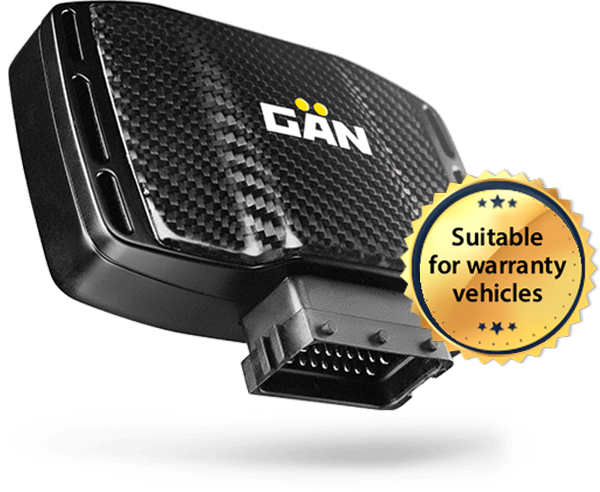
- 15 minutesfitted to the factory connectors
- IP67water and dust protection
- +39 hpwith the GAN GA+ on naturally aspirated engines
Naturally aspirated Lexus LS engines pick up +21 to +39 hp.
- up to +30%more power
GAN GT: up to 30%, GAN GTL: up to 25%, GAN GA+: up to 12%.
- GAN APPpower control via smartphone
SPORT, DYNAMIC, ECO and STOCK modes in the GAN app.
- 50 daystest drive
Feel the difference or get your money back, excluding delivery costs.
Lexus LS chip tuning: engines and generations
Lexus LS remap: five generations to tell apart
In Europe the LS goes back to the first LS 400. From October 1994 to 2000 the second-generation LS 400 had one engine only, the 4.0 V8 1UZ-FE. An LS remap or tuning box covers five generations, so you need the one that matches your car. Lexus sold the LS in Britain as the LS 400, LS 430, LS 460, LS 600h and finally the fifth-generation LS 500h, in F Sport and Takumi grades, until it left the UK range in early 2025.
Until 1997 the LS 400 made around 264 hp; the September 1997 facelift added VVT-i and a 5-speed automatic and raised it to 294 hp. The LS 430 took over from October 2000 to August 2006, using the 4.3 V8 3UZ-FE at 282 hp and, from 2003, 290 hp. The European model names run LS 400, LS 430, LS 460 and LS 600h, followed since 2018 by the LS 500 and LS 500h.
The LS 460, LS 600h and LS 500
Both the LS 460 and the LS 600h were built from September 2006 to January 2018. The LS 460 is powered by the 4.6 V8 1UR-FSE with an eight-speed automatic. That V8 is naturally aspirated, which is why the GAN GA+ is the box for the LS 460. Output is 367 hp in the all-wheel-drive car, about 380 hp after the 2009 facelift and 388 hp after the 2012 facelift. The LS 600h combines a 5.0 V8 of 394 hp with an electric motor, giving 445 hp of system output, and drives all four wheels.
The LS 500h, from January 2018, has a 3.5 V6 hybrid system with 359 hp of system output. The petrol LS 500 uses a twin-turbo 3.5 V6 rated at 421 hp. The LS 500's twin-turbo 3.5 V6 is not in the catalogue. The catalogue's 500h row at 483 hp matches no European car, since the LS 500h delivers 359 hp of system output. If you are buying an LS 460, have the servicing history, the injection system and the transmission checked first.
Lexus LS remapping: questions
Which LS 460 row is mine: 367, 380 or 389 hp?
The 367 hp row is the all-wheel-drive car at 469 Nm, while the 380 hp row is the 2009 facelift car at 493 Nm. The 389 hp row sits close to the 388 hp of the 2012 facelift.
What does the GAN GA+ add to an LS 460?
The 380 hp, 493 Nm version reaches 410 hp and 532 Nm on the GAN GA+. The GAN GA+ is rated at up to 12% more power, and up to 15% lower fuel consumption with an economical driving style. Those are the stated gains for the engine type, not a dyno reading of your car.
Which figure is shown for the LS 600h?
394 hp and 520 Nm describe the petrol V8 alone, not the 445 hp system output.
Is my LS 400 a 264 hp or a 294 hp car?
Around 264 hp means a car built up to 1997; the cars from September 1997 with VVT-i make 294 hp.
Do I need to tell my insurer about a GAN tuning box?
Yes, declare it. British insurers treat extra power as a modification, so the safe course is to tell them before you fit the box. How they treat it varies from one insurer to another, so ask before you fit the box; the standard and tuned figures you will be asked for are in the table on this page.
Is a tuning module the same as a Stage 1 remap?
Not quite. Stage 1 usually means an ECU remap without replacing any parts. The tuning module also works without replacing parts, but it does not change the ECU software: it adjusts the sensor signals, comes off in about a minute, and the OFF button in the app restores the factory settings.