





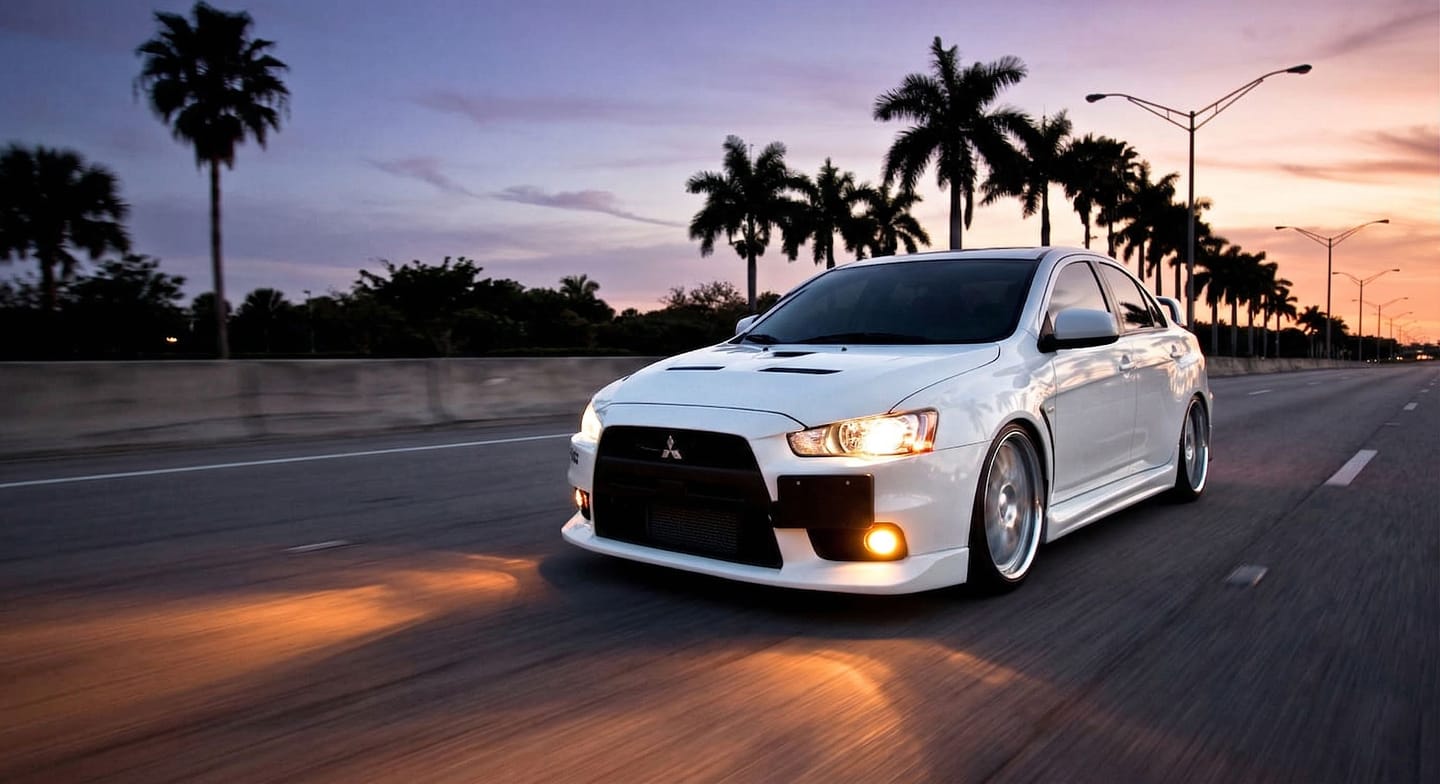
Chiptuning Mitsubishi Eclipse
14 engines · +17 to +26 hp
Mitsubishi Eclipse: 14 engines — 14 petrol. The gain is +17 to +26 hp, with up to +33 Nm more torque. GAN GA+ from 189 EUR.
All Mitsubishi Eclipse engines: exact gains
Standard output, output with GAN, the gain and the price for each box.
| Engine | STOCK → with GAN | Gain | Tuning boxes and prices | |
|---|---|---|---|---|
| Petrol · 14 engines | ||||
| 3.0i213 hp / 218 Nm | +26 hp+26 Nm |
GA — 199 EUR · 239 hp GA+ — 199 EUR · 239 hp |
Select → | |
| Spider 3.0i213 hp / 218 Nm | +26 hp+26 Nm |
GA — 199 EUR · 239 hp GA+ — 199 EUR · 239 hp |
Select → | |
| 3.0i210 hp / 278 Nm | +25 hp+33 Nm |
GA — 199 EUR · 235 hp GA+ — 199 EUR · 235 hp |
Select → | |
| Spider 3.0i210 hp / 278 Nm | +25 hp+33 Nm |
GA — 199 EUR · 235 hp GA+ — 199 EUR · 235 hp |
Select → | |
| 3.8i263 hp / 353 Nm | +21 hp+28 Nm |
GA — 199 EUR · 284 hp GA+ — 199 EUR · 284 hp |
Select → | |
| 3.8i265 hp / 355 Nm | +21 hp+28 Nm |
GA — 199 EUR · 286 hp GA+ — 199 EUR · 286 hp |
Select → | |
| Spider 3.8i260 hp / 350 Nm | +21 hp+28 Nm |
GA — 199 EUR · 281 hp GA+ — 199 EUR · 281 hp |
Select → | |
| Spider 3.8i265 hp / 355 Nm | +21 hp+28 Nm |
GA — 199 EUR · 286 hp GA+ — 199 EUR · 286 hp |
Select → | |
| 2.4i162 hp / 220 Nm | +19 hp+26 Nm |
GA — 189 EUR · 181 hp GA+ — 189 EUR · 181 hp |
Select → | |
| Spider 2.4i162 hp / 220 Nm | +19 hp+26 Nm |
GA — 189 EUR · 181 hp GA+ — 189 EUR · 181 hp |
Select → | |
| 2.4i149 hp / 214 Nm | +18 hp+26 Nm |
GA — 189 EUR · 167 hp GA+ — 189 EUR · 167 hp |
Select → | |
| Spider 2.4i147 hp / 214 Nm | +18 hp+26 Nm |
GA — 189 EUR · 165 hp GA+ — 189 EUR · 165 hp |
Select → | |
| Spider 2.4i149 hp / 214 Nm | +18 hp+26 Nm |
GA — 189 EUR · 167 hp GA+ — 189 EUR · 167 hp |
Select → | |
| GS 2.0i142 hp / 177 Nm | +17 hp+21 Nm |
GA — 189 EUR · 159 hp GA+ — 189 EUR · 159 hp |
Select → | |
Each engine has its own tuning box: GAN GT / GTL or GAN GA / GA+. Prices are per box and include the current discount.
Not sure which engine you have?
The badge alone is not enough: in this generation, the same engine designation came in different power outputs, each with its own calibration. Check the power output in your registration document and find the matching row.
Same badge, different factory power outputs in this generation:
Mitsubishi Eclipse remap: what changes
More power and torque without rewriting the ECU or swapping any parts. The GAN box only adjusts the engine sensor signals. Your manufacturer’s warranty is preserved: the ECU software is never changed, and the box can be removed at any time.
- Bluetoothchange modes from your phone
- 18 mapsfine-tuning for your engine
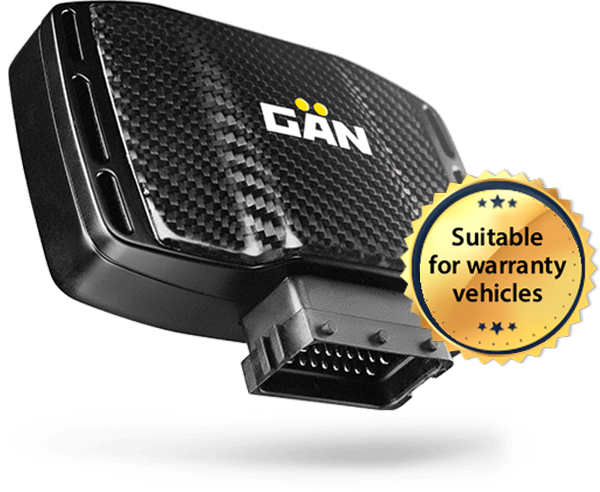
- 15 minutesfitted to the factory connectors
- IP67water and dust protection
- +26 hpbest in this generation
3.0i 213 hp → 239 hp. The other engines gain at least +17 hp; check the table for each one.
- up to +30%more power
GAN GT: up to 30%, GAN GTL: up to 25%, GAN GA+: up to 12%.
- GAN APPpower control via smartphone
SPORT, DYNAMIC, ECO and STOCK modes in the GAN app.
- 50 daystest drive
Feel the difference or get your money back, excluding delivery costs.
What makes the Mitsubishi Eclipse special
Mitsubishi Eclipse remap: the 4G63 that Europe got
Before you look for an Eclipse remap, sort out the labels: D30, G1, GS and Spyder are body codes and trim names. Mitsubishi sold only the first two generations officially in Europe, and the engine a European car carries is the 2.0 DOHC, code 4G63. A tuning box is matched to that engine, not to the trim name. The Eclipse II (D30) was sold from 1995 to 2000 as the GS 2.0 DOHC, with 146 hp and 177 Nm until 1996 and 141 hp and 179 Nm afterwards.
In the catalogue the GS 2.0 appears as a 142 hp, 177 Nm car. Germany received the original D20 Eclipse only in special versions: the 150 hp GS 2.0 DOHC and, from 1994, the 195 hp turbocharged GS-T. The 150 hp D20 GS has no row in the catalogue.
The American generations in the catalogue
The Eclipse III (2000 to 2005) and Eclipse IV (2005 to 2012) were built for the US market; in Europe they arrive as grey imports with no Mitsubishi dealer network behind them. The same is true in Britain, where the fourth generation was never sold through Mitsubishi's UK dealers and the cars you see are used left-hand-drive imports from North America. British listings use the US trim names, GS and GT, and the Spyder is the convertible. The remaining catalogue engines are all US-market units: a 2.4, a 3.0 V6 making 210 hp and a 3.8 V6 making 263 hp or 265 hp.
Those outputs are US ratings in SAE hp, so they will not match figures quoted for European cars. For the 3.0 V6, which is the 6G72, parts come from the Galant V6 24V. No Spyder convertible was sold in Europe, so its figures describe American cars only.
Mitsubishi Eclipse remap: common questions
What does the GAN GA+ do for an Eclipse D30 GS 2.0?
The catalogue's 142 hp and 177 Nm rise to 159 hp and 198 Nm with the GAN GA+. The GAN GA+ is rated for up to 12% more power. Those are the stated gains for this engine type, not a dyno reading from your own car.
3.0 V6 or 3.8 V6 Eclipse: which row applies to my car?
Choose by engine code and model year: the 3.0 V6 makes 210 hp and 278 Nm, the 3.8 V6 263 hp or 265 hp. Both engines are from the American generations.
Does the Eclipse Spyder use the same figures as the coupé?
The catalogue lists the Spyder separately, and nothing confirms that it shares the coupé's engine codes.
Is the turbocharged Eclipse GS-T covered?
No. Neither the 195 hp GS-T that Germany received from 1994 nor the American GS-T and GSX has a row in the catalogue.
Will my insurer need to know about the tuning box?
Tell them. A tuning box raises the output, and in Britain that is a declarable modification like any other performance change. Policies differ, so a quick call to your insurer before fitting is the safe route; the figures they will ask for are the stock and GAN outputs listed here.
Is a tuning module the same as a Stage 1 remap?
Not quite. Stage 1 usually means an ECU remap without replacing any parts. The tuning module also works without replacing parts, but it does not change the ECU software: it adjusts the sensor signals, comes off in about a minute, and the OFF button in the app restores the factory settings.