





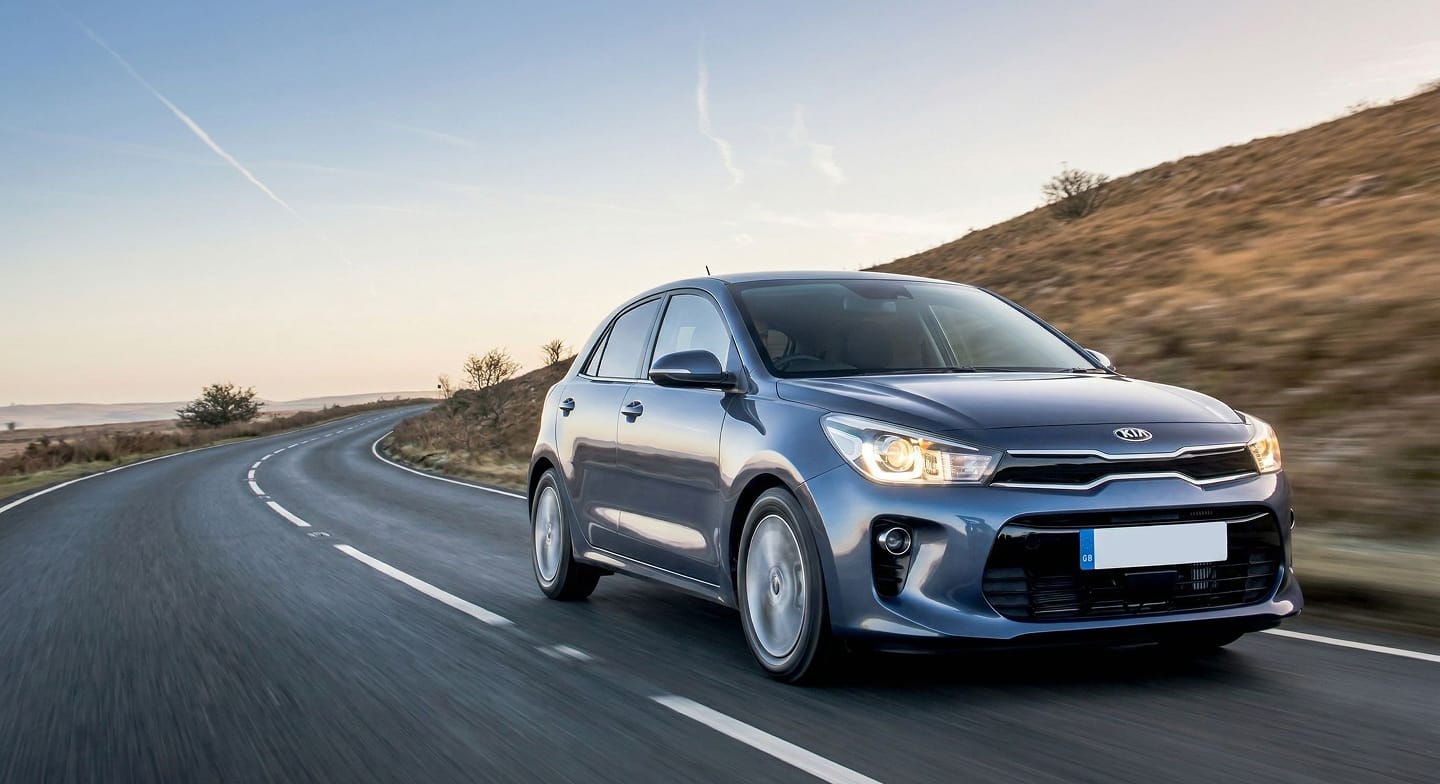
Chiptuning KIA Rio
Up to 30% more power for your Kia Rio
Our catalogue lists 4 generations and 18 engines for the Kia Rio (2005 →). For 6 turbo engines, the options are the GAN GT and GAN GTL tuning boxes: the GAN GT adds +22 to +33 hp (GAN GT from 329 EUR, GAN GTL from 219 EUR). For 12 naturally aspirated engines, the options are the GAN GA and GAN GA+: the GAN GA+ adds +9 to +15 hp (GAN GA+ from 189 EUR).
Which Kia Rio do you have?
Start with the model year and chassis code. Then pick your engine by the power output shown in your vehicle documents.
Kia Rio remap: what the GAN box does and doesn’t do
More power and torque without rewriting the ECU or replacing any parts. Unlike a flash remap, the tuning box leaves the ECU software alone and only adjusts the engine sensor signals.
- Bluetoothchange modes from your phone
- 18 mapsfine-tuning for your engine

- 15 minutesfitted to the factory connectors
- IP67water and dust protection
- +33 hpwith the GAN GT on turbocharged engines
Across the Kia Rio range: +22 to +33 hp with the GAN GT or GAN GTL.
- +15 hpwith the GAN GA+ on naturally aspirated engines
Naturally aspirated Kia Rio engines pick up +9 to +15 hp.
- GAN APPpower control via smartphone
SPORT, DYNAMIC, ECO and STOCK modes in the GAN app.
- 50 daystest drive
Feel the difference or get your money back, excluding delivery costs.
Kia Rio chip tuning: engines and generations
Kia Rio remap: petrol or diesel decides the box
Start with the fuel: a tuning box adds more to a diesel Rio than to a petrol one, and that settles which GAN box you need. In Britain the car is simply badged Rio, and used-car listings tell the generations apart by production years. That leaves two generations to know: the Rio II (JB, 2005–2011) and the Rio III (UB, 2011–2017).
Two diesels were offered on the Rio III, the 1.1 CRDi with 75 hp and the 1.4 CRDi with 90 hp, next to the 1.2 and 1.4 CVVT petrols. With the Rio IV (YB) of 2017 came the 1.0 T-GDI in 100 and 120 hp versions, while the last diesel, the 1.4 CRDi, stayed on only until May 2018.
Diesels take the GAN GT
Every Rio diesel is turbocharged, which puts it on the GAN GT. That covers three engines: the Rio II's 1.5 CRDi with 110 hp, the three-cylinder 1.1 CRDi with 75 hp and the 1.4 CRDi with 90 hp. On the 110 hp 1.5 CRDi, with its variable-geometry turbo, the torque figure matters more than the hp.
In the catalogue the 1.5 gains 33 hp and 71 Nm with the GAN GT, the 1.1 gains 22 hp and 46 Nm, and the 1.4 gains 27 hp and 66 Nm. The 1.4 CRDi has clearly more mid-range torque than the frugal but modest 1.1 CRDi, so pick the row by engine.
Petrol engines take the GAN GA+
On the Rio II the petrols are naturally aspirated and take the GAN GA+, with 12 hp and 15 Nm more on the 1.4 at 97 hp and 13 hp and 18 Nm more on the 1.6 CVVT at 112 hp. The Rio III 1.4 CVVT at 107 hp takes the GAN GA+ as well, for 13 hp and 16 Nm. The same generation's 1.2 CVVT adds 10 hp and 15 Nm. Among Rio IV engines, the 1.4 MPI at 100 hp gains 12 hp and 16 Nm.
Kia Rio remapping: questions
Kia Rio remap: does the diesel or the petrol gain more?
The diesel does: the 1.4 CRDi 90 moves from 90 hp and 220 Nm to 117 hp and 286 Nm with the GAN GT. These are stated gains for the engine type, not a dyno reading of your car. A petrol Rio takes the GAN GA+ instead: up to 12% more power, which comes to 10 to 13 hp on the engines listed above. There is no separate Rio IV 1.0 T-GDI in the Rio catalogue; the same engine is listed under the Kia Stonic as the 1.0 T-GDI (->08/2020). The 1.0 T-GDi was also the turbo petrol of the UK Rio IV, so a British car is looked up under the Stonic.
Kia Rio 1.1 CRDi: how much does the GAN GT add to the three-cylinder?
The 1.1 CRDi is a three-cylinder diesel rated at 75 hp and 170 Nm. With the GAN GT that becomes 22 hp and 46 Nm more.
Is there a tuning box for the first-generation Rio (DC)?
The Rio I, sold in Europe from 2000 to 2005, came only with naturally aspirated petrol engines, never a diesel or a turbo. The GAN GA+ adds 10 hp and 14 Nm to the 1.3 at 82 hp, and 12 hp and 17 Nm to the 1.5 at 98 hp.
ECU remap or tuning box: what suits a small hatchback like the Rio?
The two routes differ: an ECU remap rewrites the factory software in the engine control unit (ECU), whereas the GAN tuning box sits between the engine sensors and the ECU and adjusts the signals they send. As a result the factory software, the checksums and the flash counter all stay as they were. The ECU software is never changed, so your manufacturer's warranty is preserved, and the box can be taken off at any time.
Do I need to tell my insurer about a GAN tuning box?
Tell them. A tuning box raises the output, and in Britain that is a declarable modification like any other performance change. Policies differ, so a quick call to your insurer before fitting is the safe route; the figures they will ask for are the stock and GAN outputs listed here.
Is a tuning module the same as a Stage 1 remap?
Not quite. Stage 1 usually means an ECU remap without replacing any parts. The tuning module also works without replacing parts, but it does not change the ECU software: it adjusts the sensor signals, comes off in about a minute, and the OFF button in the app restores the factory settings.