





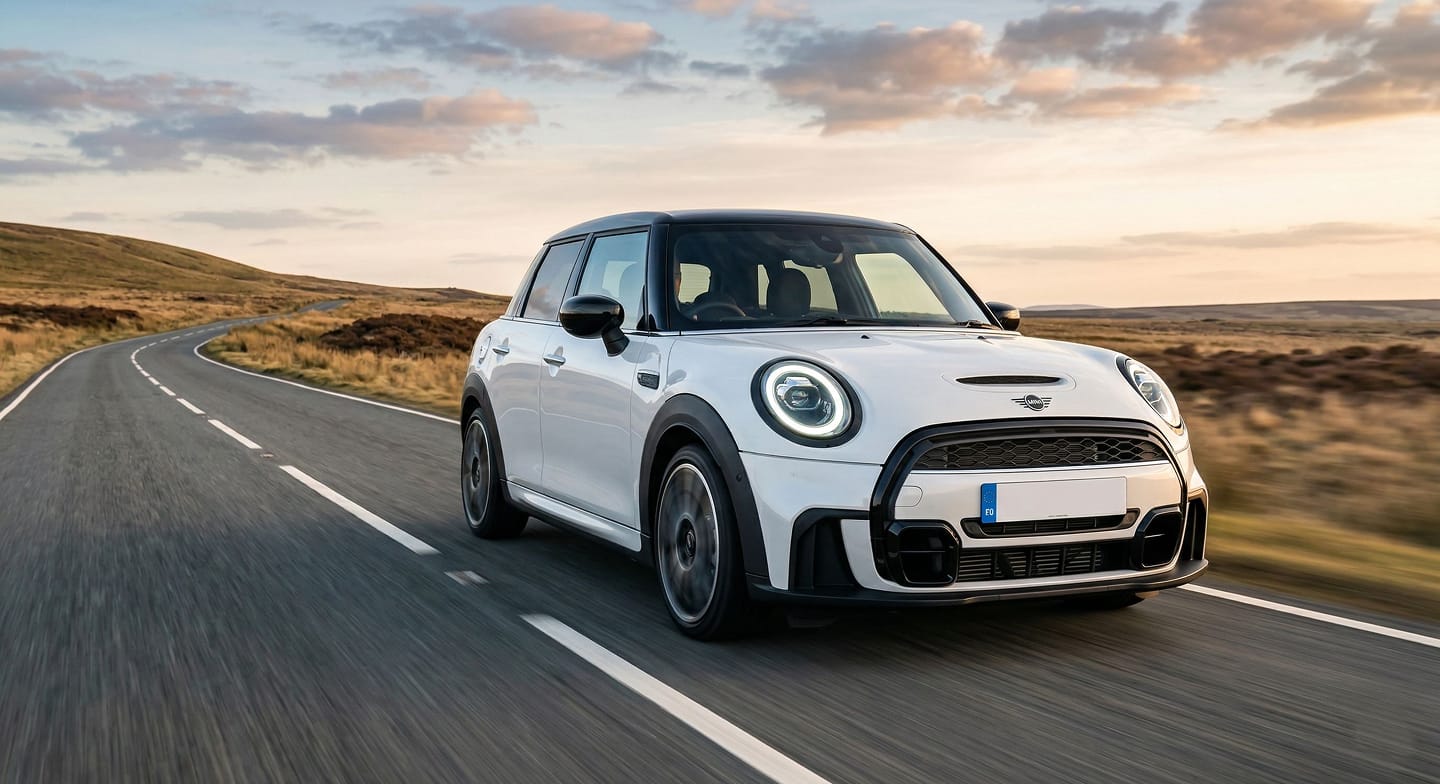
Chiptuning Mini Cooper
2 engines · +14 to +15 hp
Mini Cooper: 2 engines — 2 petrol. The gain is +14 to +15 hp, with up to +19 Nm more torque. GAN GA+ from 189 EUR.
All Mini Cooper engines: exact gains
Standard output, output with GAN, the gain and the price for each box.
| Engine | STOCK → with GAN | Gain | Tuning boxes and prices | |
|---|---|---|---|---|
| Petrol · 2 engines | ||||
| 1.6i122 hp / 160 Nm | +15 hp+19 Nm |
GA — 189 EUR · 137 hp GA+ — 189 EUR · 137 hp |
Select → | |
| Cabrio 1.6i113 hp / 150 Nm | +14 hp+18 Nm |
GA — 189 EUR · 127 hp GA+ — 189 EUR · 127 hp |
Select → | |
Each engine has its own tuning box: GAN GT / GTL or GAN GA / GA+. Prices are per box and include the current discount.
Not sure which engine you have?
Find your engine by the power output in your registration document: each version has its own module calibration.
Mini Mini Cooper remap: what changes
More power and torque without rewriting the ECU or swapping any parts. The GAN box only adjusts the engine sensor signals. Your manufacturer’s warranty is preserved: the ECU software is never changed, and the box can be removed at any time.
- Bluetoothchange modes from your phone
- 18 mapsfine-tuning for your engine
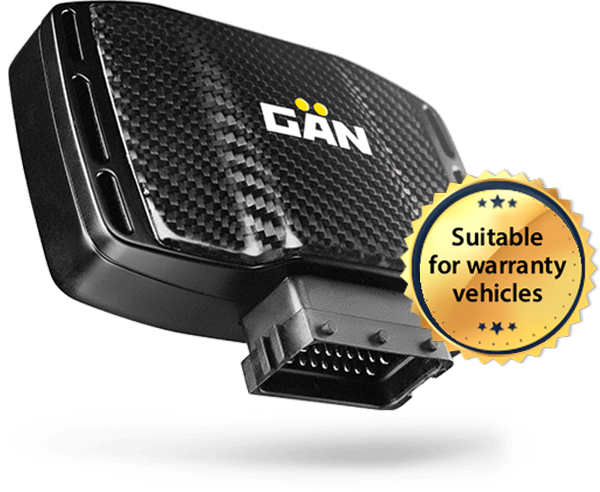
- 15 minutesfitted to the factory connectors
- IP67water and dust protection
- +15 hpbest in this generation
1.6i 122 hp → 137 hp. The other engines gain at least +14 hp; check the table for each one.
- up to +30%more power
GAN GT: up to 30%, GAN GTL: up to 25%, GAN GA+: up to 12%.
- GAN APPpower control via smartphone
SPORT, DYNAMIC, ECO and STOCK modes in the GAN app.
- 50 daystest drive
Feel the difference or get your money back, excluding delivery costs.
What makes the Mini Mini Cooper special
MINI Cooper S remap: from supercharger to turbo
Until August 2006 the Cooper S (R53) is supercharged; the R56 that arrived in November 2006 is turbocharged. When you choose a tuning box, treat the R53 and the R56 as two different cars. The R53 Cooper S was built from March 2002 to August 2006, and its 1.6-litre engine carries an Eaton M45 supercharger and makes 163 hp. That supercharged R53 Cooper S has no row in the catalogue yet.
The turbocharged R56 Cooper S makes 174 hp, or 184 hp from 2010, and the John Cooper Works version makes 211 hp. The N14 engine of the early R56 Cooper S can wear its timing chain and tensioner. The later F56 Cooper S switched to the 2.0-litre B48 turbo, so the generation code and engine code matter more than the badge. Chip tuning a Cooper S therefore starts from the generation page for your car and the output of your engine.
The Cooper 1.6 and the diesel Coopers
The plain Cooper 1.6 made 116 hp in the first generation, 120 hp in the R56 from 2006, and 122 hp from 2010 to 2013. Treat the R50 Cooper, with its naturally aspirated 1.6 Tritec, as separate from the supercharged R53 Cooper S. On the naturally aspirated R56 Cooper 1.6, the usual ownership points are the cooling system and clutch wear; timing-chain trouble is mainly an issue of the N14 in the Cooper S.
On this page the catalogue covers the 1.6 Cooper with 122 hp and 160 Nm and the Cabrio 1.6 with 113 hp and 150 Nm, both with the GAN GA+. German registration figures put petrol at 87 to 100% of all MINI registrations from 2002 to 2007, with diesel between 0 and 13%. The diesel line-up includes the One D at 90 hp, the Cooper D at 109 hp and later 112 hp, and the Cooper SD at 143 hp from April 2011.
Generations and body codes
The first generation, the R50 hatch as One, One D and Cooper, ran from June 2001 to August 2006, and the R52 Cabrio carried on until August 2008. British MINI listings usually call the generations R50/R53, R56/R57 and F56/F57. The R56 hatch was shown in Germany on 18 November 2006, and the R57 Cabrio followed in 2009. The F56 three-door arrived in March 2014 as the 1.5-litre Cooper and the 2.0-litre Cooper S, the F55 five-door followed in October 2014, and the F57 Cabrio came later. Check the catalogue by engine.
Mini Cooper remap: common questions
Which page covers my Cooper S or Cooper D?
Open the generation page for your car, such as the R56 hatch, and pick the engine by its output.
What does a GAN tuning box add to a Cooper 1.6?
In the catalogue the Cooper 1.6 is rated at 122 hp and 160 Nm, and with the GAN GA+ it reaches 137 hp and 179 Nm. Those figures are the stated gain for this engine type, not a dyno reading of your car. On the Cooper 1.6 the GAN GA+ adds up to 12% more power.
Where do the diesel Coopers sit in the catalogue?
The One D, Cooper D and Cooper SD appear on the generation pages, for example Mini (II), Clubman (R55) and Countryman (R60). The first-generation One D, with 75 hp and later 88 hp, is on the Mini (I) page.
MINI Cooper remap or tuning box: what stays untouched?
An ECU remap overwrites the factory software in the engine control unit, whereas a tuning box works alongside it. The GAN module sits between the engine sensors and the ECU and adjusts the signals they send, so the factory software, checksums and flash counter are left as they are. Your manufacturer's warranty is preserved, because the ECU software is never changed and you can remove the box whenever you like.
Should I declare the GAN box to my insurer?
Tell them. A tuning box raises the output, and in Britain that is a declarable modification like any other performance change. Policies differ, so a quick call to your insurer before fitting is the safe route; the figures they will ask for are the stock and GAN outputs listed here.
Is a tuning module the same as a Stage 1 remap?
Not quite. Stage 1 usually means an ECU remap without replacing any parts. The tuning module also works without replacing parts, but it does not change the ECU software: it adjusts the sensor signals, comes off in about a minute, and the OFF button in the app restores the factory settings.